
Our Red String
Play Our Red String
Our Red String Screenshots















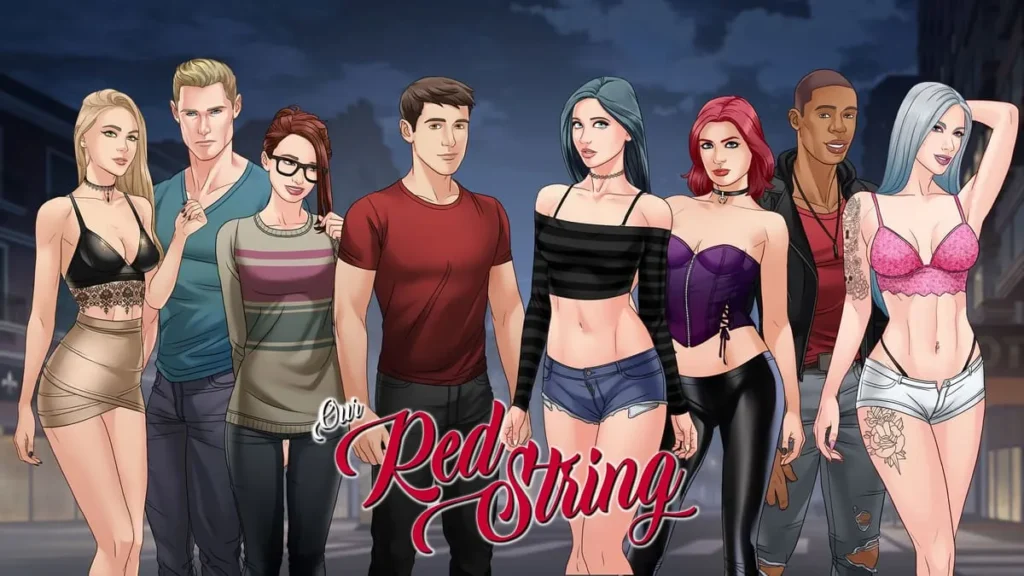
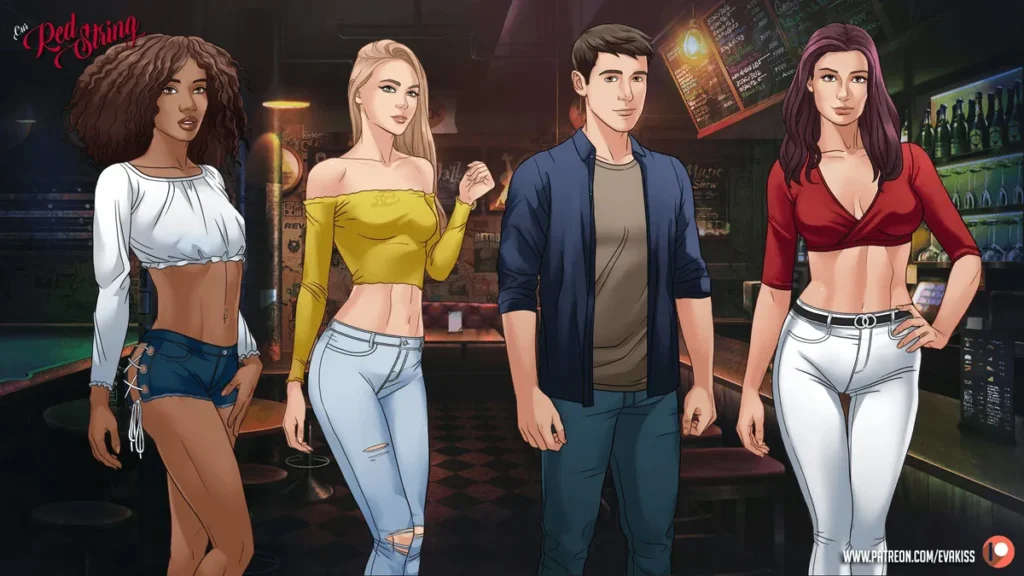



Our Red String review
Master the dual-protagonist narrative with strategic choices and relationship mechanics
Our Red String stands out as a non-linear interactive narrative experience that puts player choice at the center of storytelling. This dual-protagonist game features intricate relationship systems, multiple stat tracks, and branching storylines that shift based on your decisions. Whether you’re navigating complex character dynamics, optimizing your stats, or uncovering hidden scenes, understanding the game’s mechanics is essential for experiencing all the content this title has to offer. This comprehensive guide breaks down everything you need to know about gameplay systems, character relationships, and strategic decision-making to maximize your playthrough.
Understanding Core Gameplay Mechanics in Our Red String
Let’s be honest: the first time you boot up Our Red String, you might feel a little overwhelmed. 😅 Two protagonists, six different stats, a dozen characters to befriend or romance, and choices that seem to ripple out in every direction. It’s not your typical visual novel where you just click through. This game asks you to think, strategize, and live two lives at once. But don’t worry—that’s exactly what makes it so brilliant. Once you understand its core gameplay mechanics, you’ll go from confused player to master storyteller, weaving a narrative that is uniquely yours.
This guide is your key. We’re going to break down the three pillars that make Our Red String tick: the groundbreaking dual-protagonist game system, the strategic stat points and leveling, and the intricate relationship tracking system. By the end, terms like [LenaWits +1] or [AgendaIan > 5] will be your secret language for unlocking every possible story branch. Let’s dive in.
How the Dual-Protagonist System Works
At the heart of Our Red String is its defining feature: you don’t play as one character, you play as two. You guide both Lena, an aspiring musician working a tough office job, and Ian, a photographer wrestling with his artistic integrity. This isn’t just a gimmick—it fundamentally reshapes the entire narrative experience. The dual-protagonist game system means you’re constantly seeing the story from two sides of the same city, and your decisions for one can profoundly affect the world of the other, sometimes in ways you don’t immediately see.
Think of it like being a film director for two separate, yet intertwining, movies. One moment, you’re making choices as Lena at a stressful work event, building her Charisma to negotiate a deal. The next, you’re switching to Ian, deciding whether to use his Wits to solve a problem for a friend. The magic happens in the subtle overlaps. Maybe Lena mentions a new café she visited, and in Ian’s next chapter, you see him sitting in that same café. Perhaps a choice Lena makes to trust or distrust someone creates an “Event” that alters the dialogue options available to Ian chapters later.
🎭 Pro Tip: Get into the habit of checking both characters’ phones in the app after every major scene. A text message or a news headline on Ian’s phone might be a direct consequence of something Lena did, giving you clues about how your narratives are colliding.
This system demands a new kind of engagement. You’re not just role-playing; you’re managing two destinies. It creates a richer, more complex world because you’re never seeing the full picture from just one perspective. Mastering this dual-protagonist game system is the first step to appreciating the game’s depth. You learn to think not just, “What would I do?” but “What is best for Lena’s journey? What is right for Ian’s growth? And how do these paths weave together?”
Stat Points and Character Development
If the dual narrative is the stage, then your characters’ stats are the tools they use to perform. Forget generic “good” or “evil” meters. Our Red String uses a refined, six-stat system that shapes how Lena and Ian navigate their challenges. Earning stat points is how they grow, and understanding this is crucial for any Our Red String stats guide.
Here’s how it works: Lena and Ian each have their own independent set of six core attributes. Whenever you make a choice that aligns with a particular attribute—like a clever retort for Wits or a flirtatious comment for Lust—you’ll earn a point in that stat. The game transparently shows this with a notification like [LenaCharisma +1]. The real progression kicker? Every time you accumulate 3 stat points of any combination, your character levels up. This level-up is your golden ticket, as it often unlocks new, more advanced choices in future dialogues and scenes that were previously greyed out.
Let me give you a personal example. In an early chapter, Ian can try to console his friend Rob. I chose the gentle, empathetic dialogue options, which netted me [IanEmpathy +1] twice. That was two of the three points I needed. Later, when faced with a pushy client, I chose a diplomatic deflection instead of a blunt refusal, scoring [IanWits +1]. That third point triggered his level up! The very next time I played as Ian, a new, calmer option to resolve a conflict with his landlord was available, which wouldn’t have been there otherwise. It’s a brilliant feedback loop: your non-linear narrative choices build your stats, which in turn unlock even more non-linear narrative choices.
To keep it all straight, here’s a breakdown of the stats. Remember, while the names are the same for both characters, how they manifest can be different based on Lena or Ian’s personality.
| Stat | What It Governs | How to Increase It (Examples) |
|---|---|---|
| Wits | Intelligence, problem-solving, noticing details, clever dialogue. | Solving puzzles, making sharp observations, outsmarting someone in conversation. |
| Charisma | Charm, persuasion, social confidence, networking. | Smooth-talking your way into an event, giving a convincing speech, cheering up a friend. |
| Athletics | Physical prowess, endurance, coordination, dance. | Winning a drinking game, performing well in a physical activity, showing stamina. |
| Lust | Physical desire, flirtation, seduction, embracing sensual moments. | Choosing explicitly flirtatious dialogue, engaging in intimate scenarios, expressing desire. |
| Empathy | Emotional understanding, compassion, kindness, supportive dialogue. | Listening to a friend’s problems, choosing comforting words, helping someone selflessly. |
| Willpower | Self-control, determination, resisting temptation, sticking to principles. | Turning down a bad offer, pushing through fatigue, standing up for your beliefs. |
Your in-game phone is your best friend here. The “Stats” app meticulously tracks every single point for both characters. I made it a ritual to check it after every chapter, planning my next moves like a chess game. “Okay, Lena needs two more points to level up… do I want to push for Charisma to ace that upcoming interview, or build Empathy to mend fences with a friend?” This strategic layer is what elevates the Our Red String gameplay mechanics beyond simple storytelling.
Relationship Tracking and Agenda Points
While stats define your characters’ internal abilities, relationships define their world. This is where Our Red String‘s genius truly shines with its relationship tracking system. Every major character Lena and Ian meet—from love interests like Erica or Derek to friends like Rob or Anna—has a hidden relationship value attached to them. The game doesn’t call it a “score,” though; it calls them Agenda Points.
Think of Agenda Points as a measure of your standing and influence with that person. Did you help them? Make them laugh? Stand them up? Betray their trust? Each action adds or subtracts points from a specific character’s “Agenda.” These character relationship values are the hidden locks and keys for the entire story. Nearly every major scene branch, romantic encounter, and pivotal story beat is gated behind a condition like [AgendaErica > 7] or [AgendaRobert < 2].
Let’s walk through a concrete example from my own playthrough. In Chapter 4, Lena runs into her ex, Derek. The dialogue options included:
1. “It’s good to see you.” (Safe, neutral)
2. “You look well.” (Slightly flirtatious)
3. “What do you want?” (Cold, confrontational)
I was trying to see if there was still a spark, so I chose option 2, the flirtatious one. The game notified me: [AgendaDerek +2]. This single non-linear narrative choice did two things. First, it immediately raised my hidden score with Derek. Second, it created an “Event” flag in the narrative code. Because I had [AgendaDerek > 3] at that point, two chapters later, a completely new scene unlocked where Derek texted Lena asking to meet for coffee—a scene that would not have occurred if my Agenda with him was lower or negative.
This is the variable system notation you’ll see in advanced walkthroughs. It’s not just code; it’s the DNA of your story. Your phone’s “Agenda” app is the dashboard for this entire system. It shows you a list of all key characters and a visual bar representing your current standing with them, though not the exact number. Watching those bars fill or empty based on your choices is incredibly compelling.
💡 Personal Insight: Don’t try to max out every relationship. It’s almost impossible and, frankly, less interesting. Early on, I decided I wanted Lena to pursue a music career passionately (focusing on her bandmate Agenda) and for Ian to explore a complex relationship with Erica. I made choices that prioritized those character relationship values, even if it meant burning bridges with other characters. The resulting story was messy, personal, and deeply satisfying.
The relationship tracking system and the stat points and leveling system are in constant conversation. A high Charisma stat might give you a special, persuasive option when talking to your boss, which could net you major Agenda points. Conversely, failing a Wits check in an argument with a friend might lose you Agenda points. It’s a dynamic web where your growth as a person directly impacts your social world.
Our Red String gameplay mechanics are a masterclass in interactive storytelling. By separating the internal (stats) from the external (relationships) and viewing it all through the lens of two protagonists, the game creates an unparalleled sense of agency. You’re not following a story; you’re architecting it from the ground up, one strategic choice, one leveled-up stat, and one carefully managed relationship at a time. Now that you understand the core systems, you’re ready to stop playing reactively and start crafting your masterpiece. Happy storytelling! ✨
Our Red String delivers a sophisticated interactive experience where every choice carries weight and consequence. By mastering the stat system, understanding relationship mechanics, and strategically navigating the branching narrative, you unlock the full depth of what this dual-protagonist game offers. The combination of character-specific story paths, hidden gallery content, and multiple endings ensures that each playthrough reveals something new. Whether you’re optimizing relationships, collecting all gallery scenes, or exploring different character endings, the mechanics work together to create a personalized narrative experience. Take time to experiment with different choices, track your relationship values carefully, and don’t hesitate to reference walkthroughs when pursuing specific story branches or hidden content.